Medieval riddles have fascinated generations with their clever wordplay, mysterious imagery, and humorous twists.
These riddles, often written in old manuscripts, were designed to entertain, challenge the mind, and even teach moral lessons.
Whether you are a history enthusiast, a teacher looking for fun classroom activities, or someone who simply enjoys a mental challenge, medieval riddles offer a delightful journey into the creativity of the past.
This collection of 155+ riddles brings together the best examples of witty, puzzling, and sometimes downright silly riddles, all crafted in a way that modern readers can enjoy.
Get ready to laugh, think, and marvel at the cleverness of medieval wordplay.
Benefits of Reading Puns
Puns are not just playful jokes—they have several benefits for your brain and well-being:
- Boost Creativity: Wordplay encourages lateral thinking and imagination.
- Improve Vocabulary: Engaging with puns helps you learn new words and meanings.
- Enhance Problem-Solving Skills: Deciphering riddles trains your mind to recognize patterns.
- Stress Relief: Laughter from clever wordplay reduces stress and improves mood.
- Social Connection: Sharing puns and riddles can make conversations more enjoyable.
By exploring medieval riddles, you not only enjoy humor from centuries ago but also sharpen your mental skills in a fun way.
Best Picks
Here are 10 of the most entertaining medieval riddles to get you started:
- I fly without wings, I cry without eyes. What am I? (Cloud)
- The more you take, the more you leave behind. (Footsteps)
- I am always in front of you but can’t be seen. (The future)
- I speak without a mouth and hear without ears. (Echo)
- The more I dry, the wetter I become. (Towel)
- I am not alive, but I grow; I don’t have lungs, but I need air. (Fire)
- I have keys but no locks. I have space but no rooms. (Keyboard)
- I’m tall when I’m young, short when I’m old. (Candle)
- The more you take me, the more I grow. (Hole)
- I can be cracked, made, told, and played. (Joke)
Medieval Riddles About Nature
- I run but never walk. (River)
- I sleep all winter and wake in spring. (Hibernating bear)
- Green I am, yet I die in winter. (Leaf)
- I fall but never get hurt. (Rain)
- My horns are not mine, yet I wear them proudly. (Deer)
- I shine without fire and light up the night. (Moon)
- I fly in the air and sing without words. (Bird)
- I bite but have no teeth. (Frost)
- My roots go deep, but I never move. (Tree)
- I am soft as a cloud but heavy as a stone. (Snow)
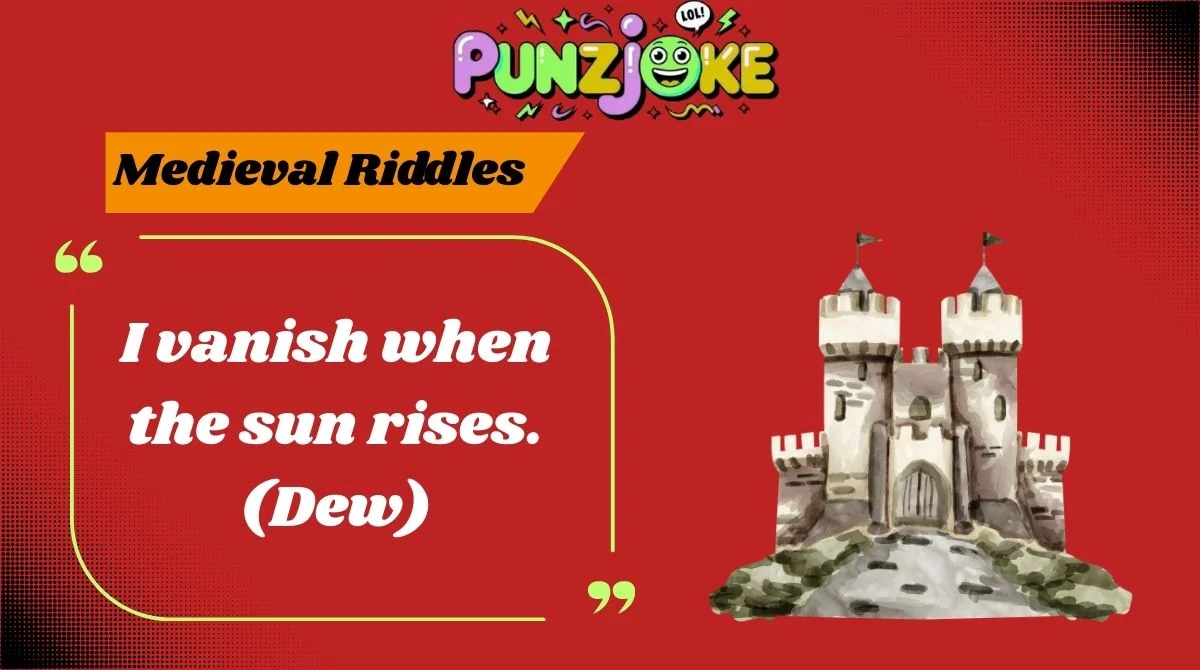
- I vanish when the sun rises. (Dew)
- I grow only in shadow. (Mushroom)
- I roar but have no mouth. (Wind)
- I am golden in fields but eaten by men. (Wheat)
- I sparkle like jewels after a storm. (Raindrop)
- I am a home for tiny creatures. (Beehive)
Medieval Riddles About Food
- I am white, soft, and baked to delight. (Bread)
- I am sweet but come from a flower. (Honey)
- I grow in the ground but wear a crown. (Carrot)
- I am round and red, yet I do not bleed. (Apple)
- I melt in your mouth but am cold. (Butter)
- I am long, yellow, and monkeys love me. (Banana)
- I am filled but not hollow, eaten in layers. (Pie)
- I am tiny, black, and grow in bunches. (Peppercorn)
- I am green and sometimes spicy. (Chili)
- I am a drink from grapes. (Wine)
- I am white, solid, and creamy. (Cheese)
- I am round, red, and have seeds inside. (Tomato)
- I am baked and sometimes sweet. (Cookie)
- I come in pods but never talk. (Peas)
- I am sticky and sweet and stick to your teeth. (Caramel)
- I am hot, spicy, and warms your soul. (Soup)
Medieval Riddles About Animals
- I hop and have long ears. (Rabbit)
- I am king of the jungle. (Lion)
- I have stripes but am not a barber’s towel. (Tiger)
- I roar but live in the sea. (Whale)
- I carry my house everywhere. (Snail)
- I quack but wear no coat. (Duck)
- I climb walls without hands. (Spider)
- I have a mane but no tail. (Horse)
- I swim in schools without a classroom. (Fish)
- I sleep standing up. (Horse)
- I hum and make honey. (Bee)
- I jump far but have no wings. (Frog)
- I bite but don’t eat. (Mosquito)
- I have a shell and am very slow. (Turtle)
- I howl at the moon. (Wolf)
- I shine with colors in the sky. (Peacock)
Medieval Riddles About Objects
- I have hands but no arms. (Clock)
- I open and close but am not a door. (Book)
- I hold treasure but am not a chest. (Wallet)
- I have pages but am not a tree. (Book)
- I can be cracked, spun, or dropped. (Egg)
- I shine without light. (Mirror)
- I protect you from rain but have no legs. (Umbrella)
- I am carried on your back but never tired. (Bag)
- I can fly without wings. (Arrow)
- I hold water but am not a river. (Bucket)
- I have a face but no eyes. (Clock)
- I am tied but never free. (Shoelace)
- I am struck but not hurt. (Bell)
- I have teeth but cannot bite. (Comb)
- I am rolled but never eaten. (Scroll)
- I have a tongue but never speak. (Shoe)
Medieval Riddles About People
- I am a king without a crown. (Actor)
- I travel the world but stay in one place. (Postman)
- I speak many languages but have no mouth. (Book)
- I work at night and sleep by day. (Owl)
- I carry wisdom but weigh nothing. (Teacher)
- I am sharp but not a sword. (Knife)
- I serve but never eat. (Waiter)
- I write but have no hand. (Pen)
- I am a traveler but never move. (Map)
- I listen but do not hear. (Ear)
- I hide in corners but see everything. (Cat)
- I fight without weapons. (Lawyer)
- I am tall but look down on no one. (Tree)
- I follow you everywhere but leave no trace. (Shadow)
- I am full of holes but can hold water. (Sponge)
- I teach without speaking. (Book)
Medieval Riddles About Time
- I run but never move. (Clock)
- I am invisible but felt by all. (Time)
- I heal wounds but cannot touch them. (Time)
- I fly but have no wings. (Hour)
- I can be wasted but never bought. (Time)
- I come once a year but never again. (Birthday)
- I am new every day. (Sunrise)
- I steal moments silently. (Time)
- I have no beginning but always end. (Time)
- I am counted but never seen. (Second)
- I wait for no one. (Time)
- I move in circles but never tire. (Clock hands)
- I mark endings and beginnings. (Calendar)
- I age everything but grow old myself. (Time)
- I am measured but cannot be touched. (Hourglass)
- I bring wisdom and wrinkles. (Time)
Medieval Riddles About Mysteries
- I am hidden but reveal truth. (Book)
- I vanish when spoken. (Silence)
- I am seen but cannot be touched. (Shadow)
- I am broken but still whole. (Promise)
- I answer but never speak. (Echo)
- I exist only when sought. (Treasure)
- I follow you but never arrive. (Shadow)
- I bind without chains. (Love)
- I fly without wings. (Thought)
- I am soft but stronger than steel. (Word)
- I am caught but never held. (Idea)
- I am lost but found in stories. (Memory)
- I am heavy yet lighter than air. (Hope)
- I hide in darkness but shine in light. (Truth)
- I am sharp but cut nothing. (Wit)
- I vanish yet leave an echo. (Sound)
Medieval Riddles About Travel
- I go everywhere but stay in place. (Map)
- I carry goods without hands. (Cart)
- I have roads but no cars. (Map)
- I lead travelers but walk no steps. (Signpost)
- I have sails but no wind. (Ship)
- I move mountains but stay still. (Bridge)
- I am round and roll but have no legs. (Wheel)
- I shine at night and guide the way. (Star)
- I have doors but no rooms. (Train carriage)
- I can fly without wings. (Arrow)
- I am fast but silent. (Wind)
- I take you places but never move. (Road)
- I am followed but never caught. (Path)
- I connect worlds but stand still. (Bridge)
- I am high but never fall. (Tower)
- I guide but cannot see. (Compass)
Medieval Riddles About Everyday Life
- I am opened and closed daily. (Door)
- I warm you but burn nothing. (Fireplace)
- I hold water but never drink. (Cup)
- I illuminate but have no flame. (Lantern)
- I am cleaned but never dirty. (Towel)
- I travel without moving. (Message)
- I am fast but cannot run. (Clock)
- I catch things but have no hands. (Net)
- I am tied but never bound. (Shoelace)
- I spin but never fall. (Wheel)
- I am sharp but cannot cut. (Mind)
- I speak without a tongue. (Letter)
- I give life but have none. (Seed)
- I hold things but cannot carry. (Bag)
- I grow but am not alive. (Hair)
- I tell stories but never speak. (Book)
FAQs About Medieval Riddles
What is a medieval riddle?
A medieval riddle is a puzzle or wordplay from the Middle Ages, often written in manuscripts to entertain or teach lessons.
Why were riddles popular in medieval times?
They were used for entertainment, education, and mental exercise, often shared orally in courts or written in manuscripts.
Can medieval riddles be solved today?
Yes! Many are timeless and still challenge modern readers’ wit and imagination.
Are medieval riddles only in English?
No. They exist in Old English, Latin, Norse, and other medieval languages.
How can I use medieval riddles today?
They can be used in classrooms, games, writing prompts, or as fun brain exercises.
Conclusion
Medieval riddles offer a fascinating glimpse into the humor, creativity, and intelligence of the past.
From nature and food to mysteries and everyday life, these riddles challenge the mind while bringing a smile to the face.
Exploring them helps enhance vocabulary, problem-solving, and critical thinking skills.
Whether used in education, social gatherings, or personal entertainment, medieval riddles remain timeless treasures that connect us to centuries of clever minds.
By indulging in these 155+ riddles, you join a long tradition of puzzle lovers, sharpening your wit while enjoying a delightful journey through history’s playful wordplay.